
Three Years In. Here's What I Got Wrong First.
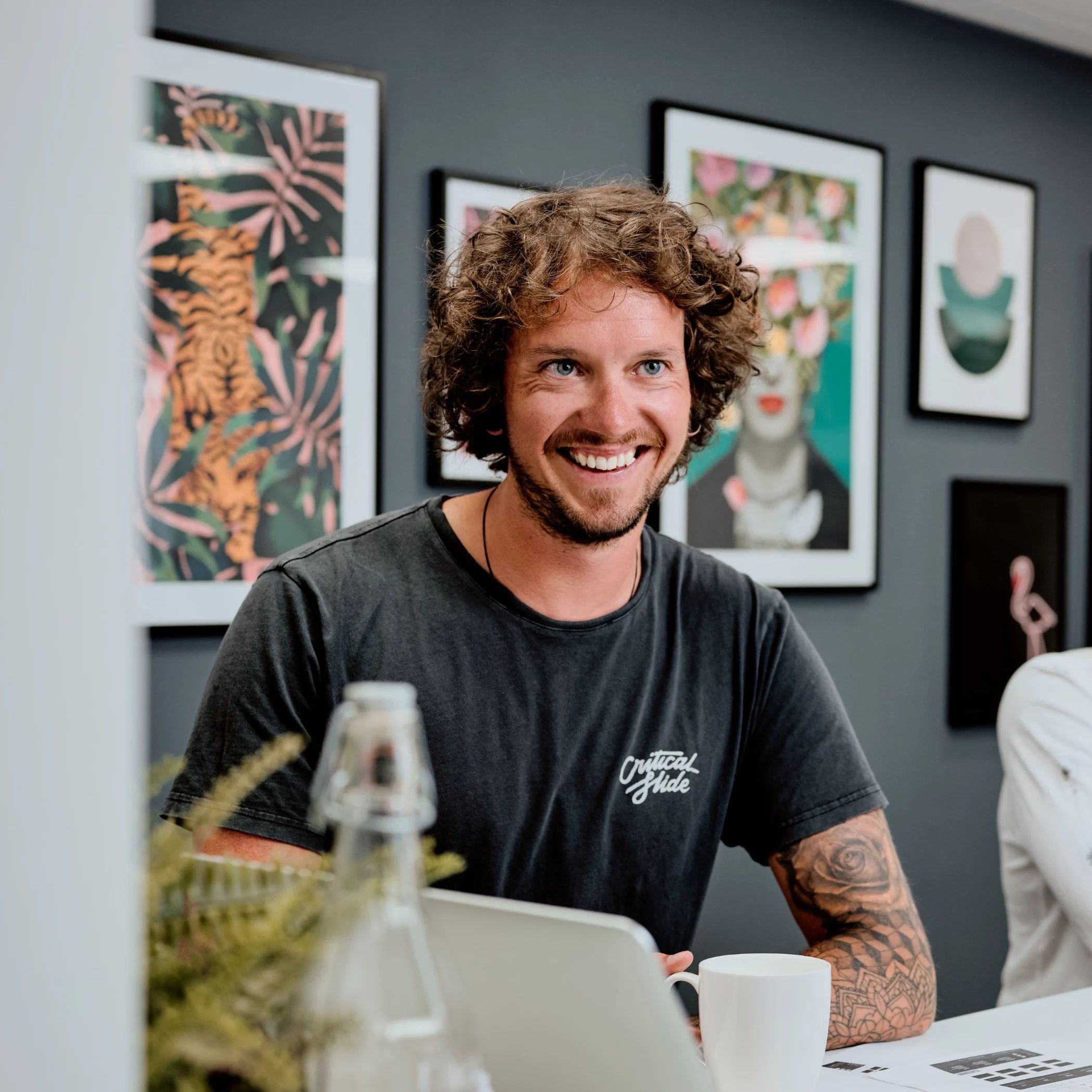
I started VisionaryGrid Studio three years ago with a fairly clear idea of what I wanted to build.
A small, specialist studio, not a bloated agency with high overheads and a roster of clients we were keeping on just to cover the running costs. Something a lot leaner, focussing on the right clients, the right work, the kind of output I'd actually be proud of.
The vision was right. The execution, in the early days, was... often not.
This isn't a highlight reel. It's the honest version, what I got wrong, what I had to unlearn, and what eventually started to work. If you're running a creative business or thinking about starting one, I hope some of it saves you time.
I was selling the wrong thing
The biggest mistake I made early on was going out and selling design to non-designers. Talking about craft, process, aesthetics, the stuff I cared about, to people whose primary concern was their pipeline, their revenue, their positioning in the market.
Nobody buys design. They buy what design does for them.
It sounds obvious when you say it out loud. But it took me longer than I'd like to admit to really internalise it. I was selling the service. My clients were buying the outcome. And until I started leading with the transformation rather than the deliverable, I was essentially speaking a language nobody I was talking to was fluent in.
The bitter pill I now say to all my clients, what you do almost doesn't matter. What you can change for your clients, that's the only thing that matters in a sales conversation. I see businesses making this same mistake constantly. They describe their process in detail and wonder why prospects don't bite. Lead with the outcome.
Always.
I was using AI to shortcut the thinking
Early on, I leaned on AI tools to speed up the thinking process. Get the ideas out faster, shape the strategy quicker, move on. It never worked the way I hoped it would.
Turns out...the thinking that makes the work good isn't the part you can outsource. The perspective, the point of view, the specific way I see a problem, that's the thing clients are actually paying for. The moment I tried to shortcut that, the work got flatter. Less interesting. Less distinctly mine.
Your voice and your way of thinking are the product. Everything else is just the production of it.
I didn't understand the value of doing the little things daily
When I started, I wasn't posting. Wasn't writing. Wasn't sharing opinions or putting my thinking into the world in any consistent way. I was doing the work and hoping people would find out about it somehow.
Referrals trickled in. The pipeline was ...lumpy. And I was putting a lot of energy into looking for work rather than creating conditions where work found me.
What changed it was getting genuinely helpful online. Not broadcasting, not promoting, just sharing things that were actually useful to the people I wanted to work with. Opinions on brand strategy. Reflections on what was and wasn't working. The kind of thinking I'd give away in a conversation, written down and put into the world.
The work that came back from that, and the relationships that came from it, was incomparably better than anything I generated from outreach. You fill up a bank account by putting value in. Then when you need to make a withdrawal, people are there. That's not a metaphor I came up with, it came from a book called The Company of One by Paul Jarvis, which reframed how I thought about the whole thing.
The Company of One changed how I thought about scale
My original plan involved building a small boutique agency, bringing in specialist collaborators for the right projects, staying lean, avoiding the bloat that makes most agencies unpleasant to work in and expensive to run.
The Company of One pushed that thinking further. It made the argument that the goal shouldn't automatically be growth for its own sake. That the most valuable thing you can build is something that delivers exceptional results without needing to scale beyond what you can control and be proud of.
That resonated deeply. It's not about staying small. It's about staying good. Keeping the work at a standard you can stand behind. Working with clients you can genuinely make a difference for, rather than filling a roster to cover overheads.
That thinking shapes everything about how VisionaryGrid works now.
The specialist question
Early on I went out as a generalist. The worry was that being too specific would narrow the field, that I'd be turning away work I could do perfectly well. What I found instead was that being a generalist meant not really speaking to anyone. You become beige. Present but unnoticed.
Niching down doesn't mean picking an industry and only serving that industry. You can niche horizontally, picking a problem that spans multiple sectors and becoming the person who solves that specific problem better than anyone else. That's what we do. We help established B2B service businesses turn cold attention into clients through brand, website, and a conversion system that does the heavy lifting. That applies in financial services, healthcare, SaaS, hospitality, consulting, the industry changes, the problem doesn't.
The moment I got clear on that, the right clients started finding me. And the conversations got dramatically better.
Where it's got to
Three years in, I love the work. I love the clients. I've built something I'm genuinely proud of, the way it runs and who it runs with. The Horsemen collective, the Greenhouse community, the relationships with people across the industry who push my thinking and make the work better.
I've met some incredible people just by putting myself out there. Which, if I'm honest, was the thing I was most reluctant to do at the start.
If there's one thing I'd tell someone starting a creative studio today, it's this: go out and be useful. Don't ask for work. Don't sell your process. Just be genuinely, consistently helpful to the people you want to work with, and trust that the rest follows.
It does.
It just takes longer than you think it will.
Subscribe to receive weekly tips, advice and knowledge on growing your business online
Before you commit to anything
Not sure where to start? The 4C Growth Diagnostic takes eight minutes.
Twenty questions. A scored breakdown across all four pillars, Clarify, Craft, Convert, Continue. You will finish with a clear view of which part of your business is holding the next stage back, a priority for where to focus first, and a free resource that addresses your specific gap directly.
There is no pitch at the end. If the output is useful, you have something to act on today. If it is not, you have lost eight minutes.