
Your Framework Is Your Most Valuable Asset. Most Businesses Haven't Named It Yet.

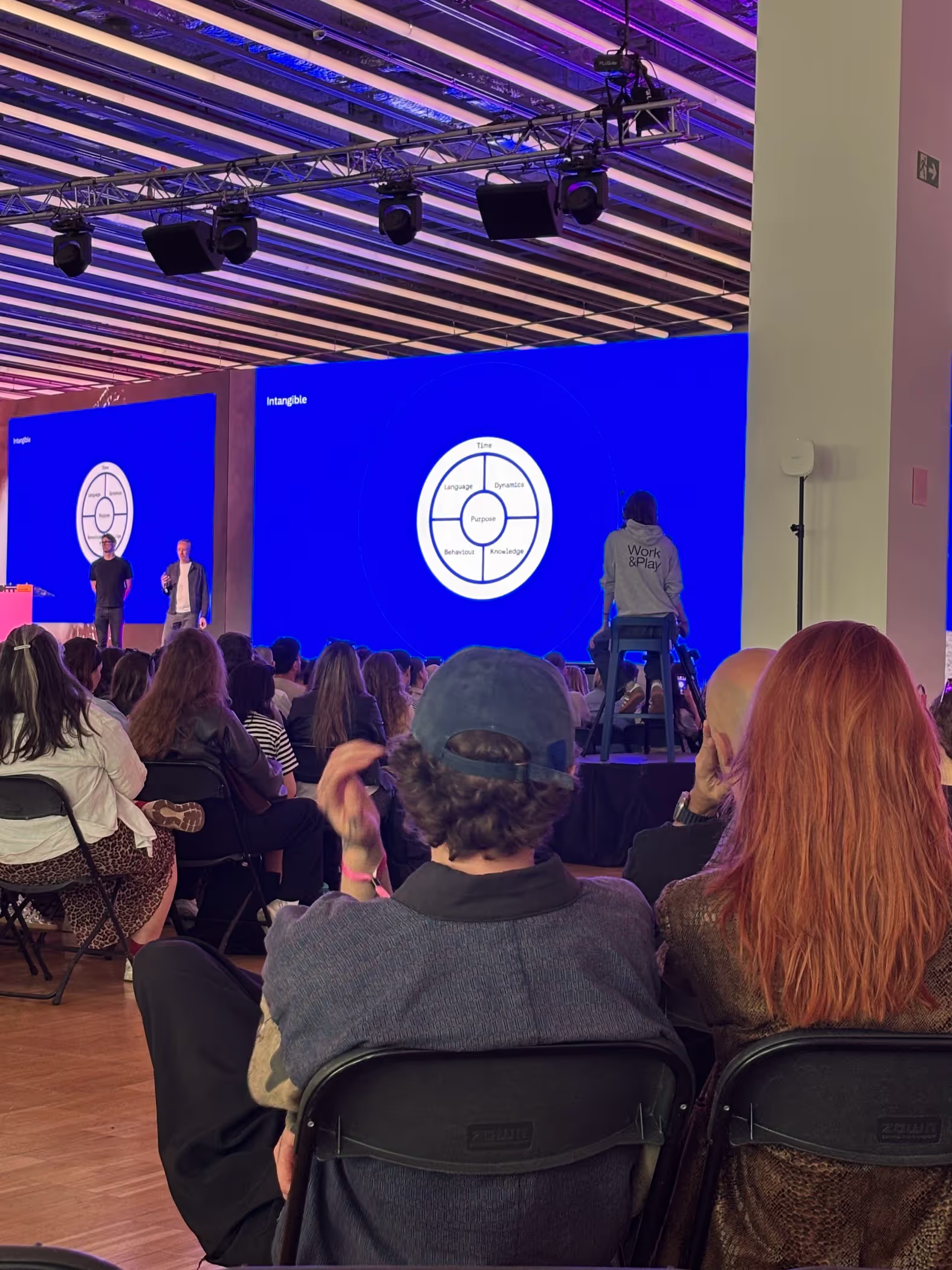
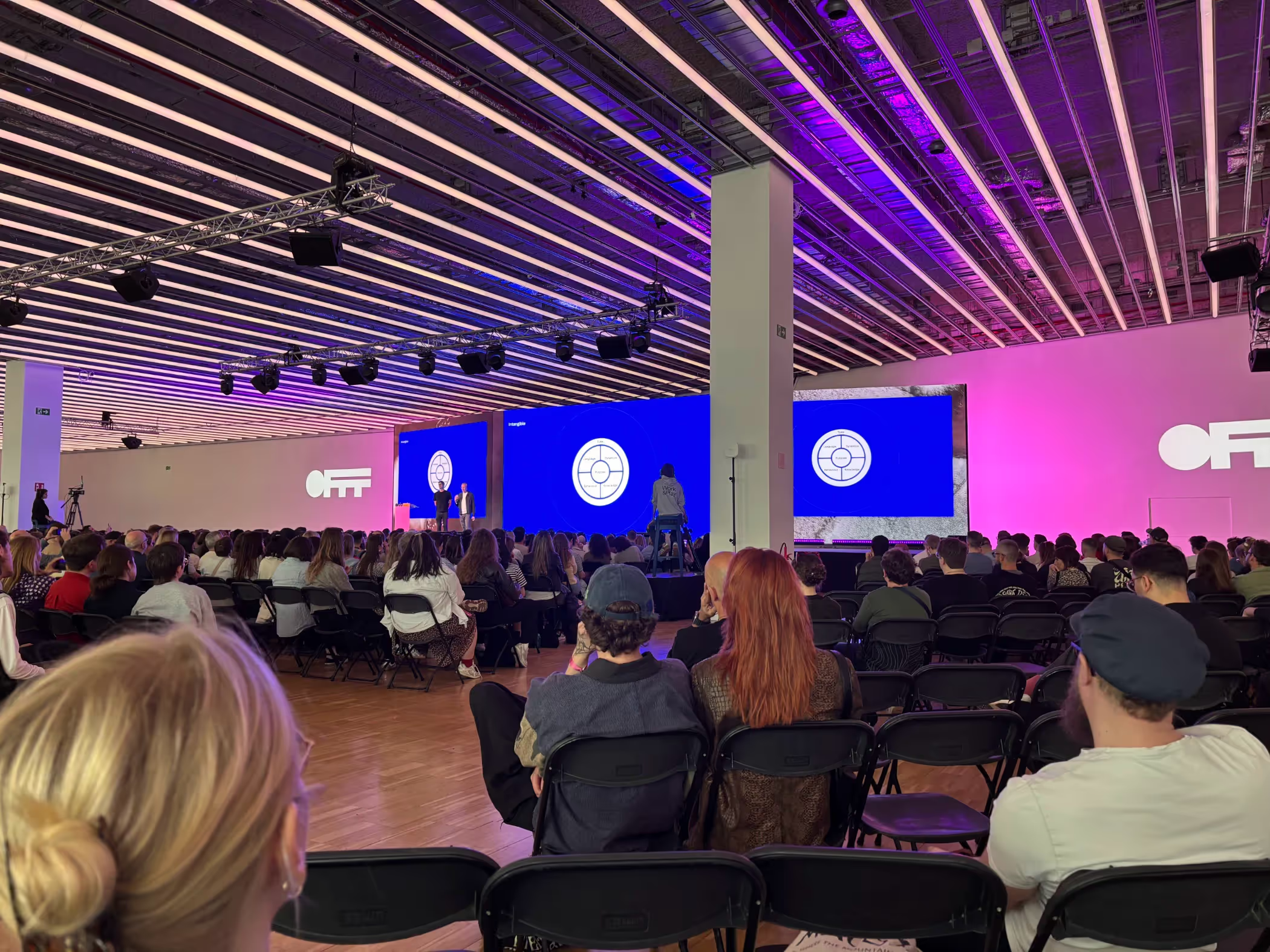
I was at OFFF Barcelona in April (one of the best design conferences in the world I'd say!... apart from Greenhouse obviously!) and the talk that stuck with me most wasn't about aesthetics. It wasn't about typography or colour or motion. It was a studio called Wiedemann Lampe, and they spent their entire slot walking through their thinking framework for branding physical spaces.
Which was fucking incredible.
They had a project branding a city in Abu Dhabi. An entire city. And rather than showing us the finished identity and talking about the visual decisions, they walked us through the methodology they'd developed to approach that kind of problem. So how do you distil the intangible qualities of a place, the architecture, the culture, the feeling of being there, into a coherent brand system?
They had a framework for it with named stages, boiled down into a repeatable process. Most importantly though, it was a way of thinking that was entirely theirs.
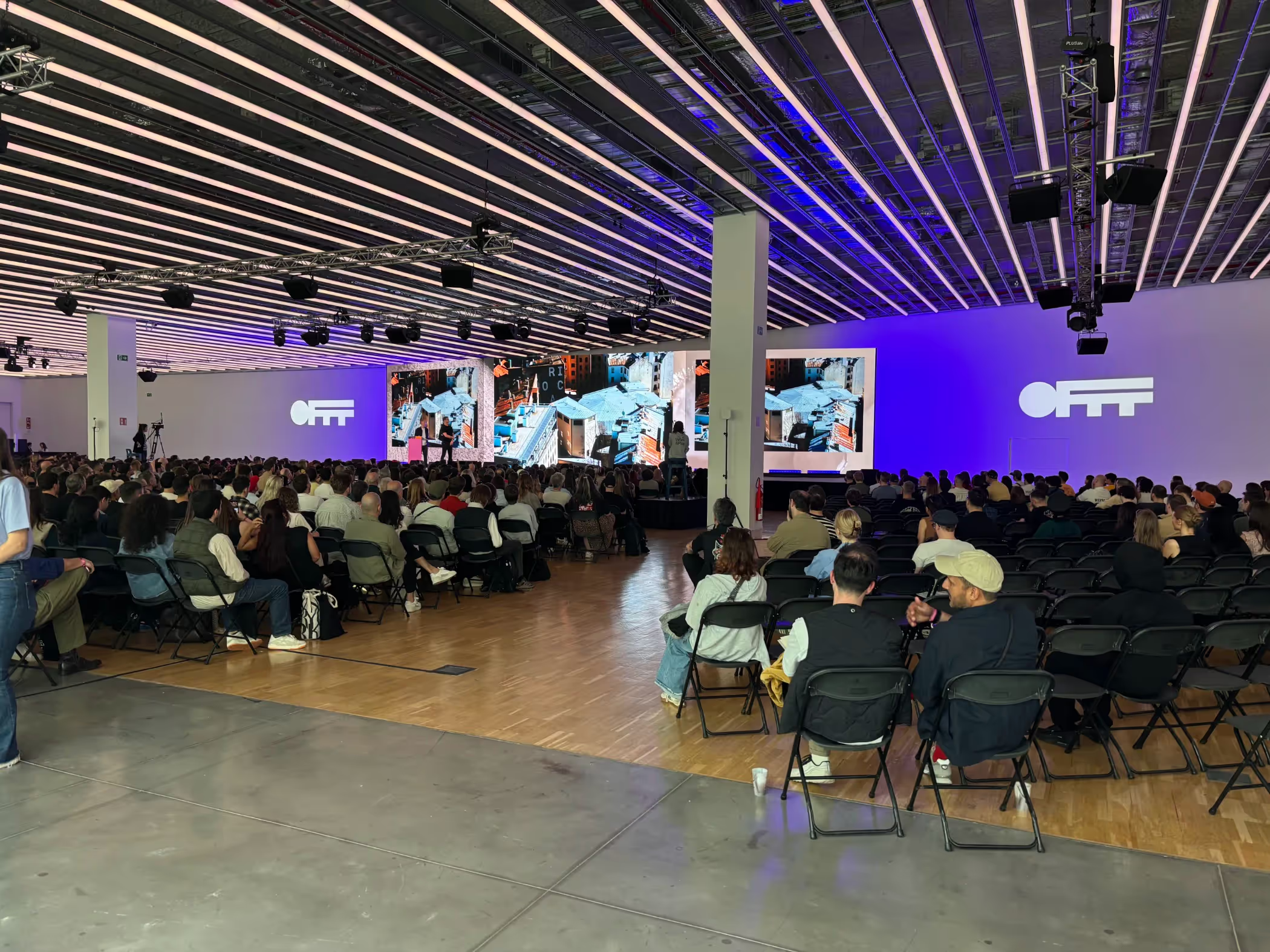
I left that talk thinking that's it. That's the thing most businesses are missing. I sort of already knew this, but it was so validating to see an agency at that scale talking about exactly what I think is so important.
Remember the thing you do that nobody else does quite the same way
Every business we've worked with has a methodology. A unique way of approaching problems that's been shaped by years of doing the work, making mistakes, refining the process, and developing an instinct for what works and what doesn't.
Most of our clients never name it. They just do it. And because it's never been made explicit, never been given a name, a structure, a set of stages because they don't think it's unique. It's just 'what they do'.
Clients don't know what you know, they could think it's just the work. But it could also look like a proprietary system. Which is something else entirely.
The difference between "we do good brand strategy" and "we run clients through our Demand Tension framework" isn't just marketing. It's the difference between selling expertise and selling a process. One is vague and hard to evaluate. The other is specific, impressive, and far easier to buy.
Named IP changes how prospects perceive you before they've even spoken to you. It signals that you've done this enough times to have a system. That the outcome isn't dependent on inspiration or luck. That there's a repeatable path from their current situation to the result they want. That's what serious buyers are looking for.
Why most businesses don't do this
The honest reason is that it feels uncomfortable. There's a British tendency (and a creative industry tendency especially) to be suspicious of frameworks. They feel like they reduce something nuanced and complex to a diagram and they feel a bit corporate.
But here's the thing Wiedemann Lampe understood, their framework doesn't replace the nuance. It contains it. The stages they walked us through weren't simplistic, they were sophisticated. The framework was just the structure that made the sophistication legible to an audience. It made the complexity navigable rather than overwhelming.
The other reason is that people are too close to their own work to see the pattern in it. When you've been doing something for years, the way you approach it feels obvious. You don't realise that what's obvious to you is invisible to everyone else, including the people who most need to understand it.
How to find and name yours
The starting point is to look backwards, not forwards. Don't try to design a framework from scratch. Instead, look at the projects you're most proud of, the ones where the outcome was genuinely strong, and ask: what did we actually do for this client? Not what do we say we do. What did we actually do, in what order, and why?
You're looking for the pattern. The stages that appear every time and the questions that always need answering before you can move forward. Most businesses find that when they look carefully at their best work, the same structure keeps showing up. That structure is your framework. It's already there. It just hasn't been named.
Once you've identified the stages, naming them is the next job. And this matters more than people think. Generic names, Discovery, Strategy, Delivery, are forgettable and interchangeable. They don't signal anything distinctive about how you work. Specific names that connect to the outcome or the feeling at each stage are far more powerful. Our four stages, Clarify, Craft, Convert, Continue, each describe what actually happens at that point in the engagement, not just a generic phase label.
The test for a good framework name: if you say it to a prospect who's never heard of you, do they immediately understand what the outcome of each stage is? If yes, the name is doing its job. If not, it needs work.
What to do with it once you have it
Name it. Put it on your website. Talk about it in your content. Use it as the structure for your discovery conversations. Reference it in your proposals. Let it show up everywhere, consistently, until it becomes the thing people associate with how you work.
The goal isn't to make it feel like a product. The goal is to make your process legible and to give prospects a mental model for how you'd approach their problem before they've committed to anything. That's what builds confidence. That's what makes the "book a call" feel like a natural next step rather than a leap of faith.
Wiedemann Lampe branding an entire city is an extreme example. But the principle applies at any scale. Your framework, however simple or sophisticated it is, is the thing that separates you from everyone else who does roughly what you do. Name it. Own it. Make it visible.
If you want help identifying and naming yours, that's exactly what the Foundation Sprint is built for.
Happy hunting!
Subscribe to receive weekly tips, advice and knowledge on growing your business online
Before you commit to anything
Not sure where to start? The 4C Growth Diagnostic takes eight minutes.
Twenty questions. A scored breakdown across all four pillars, Clarify, Craft, Convert, Continue. You will finish with a clear view of which part of your business is holding the next stage back, a priority for where to focus first, and a free resource that addresses your specific gap directly.
There is no pitch at the end. If the output is useful, you have something to act on today. If it is not, you have lost eight minutes.