
MadHen
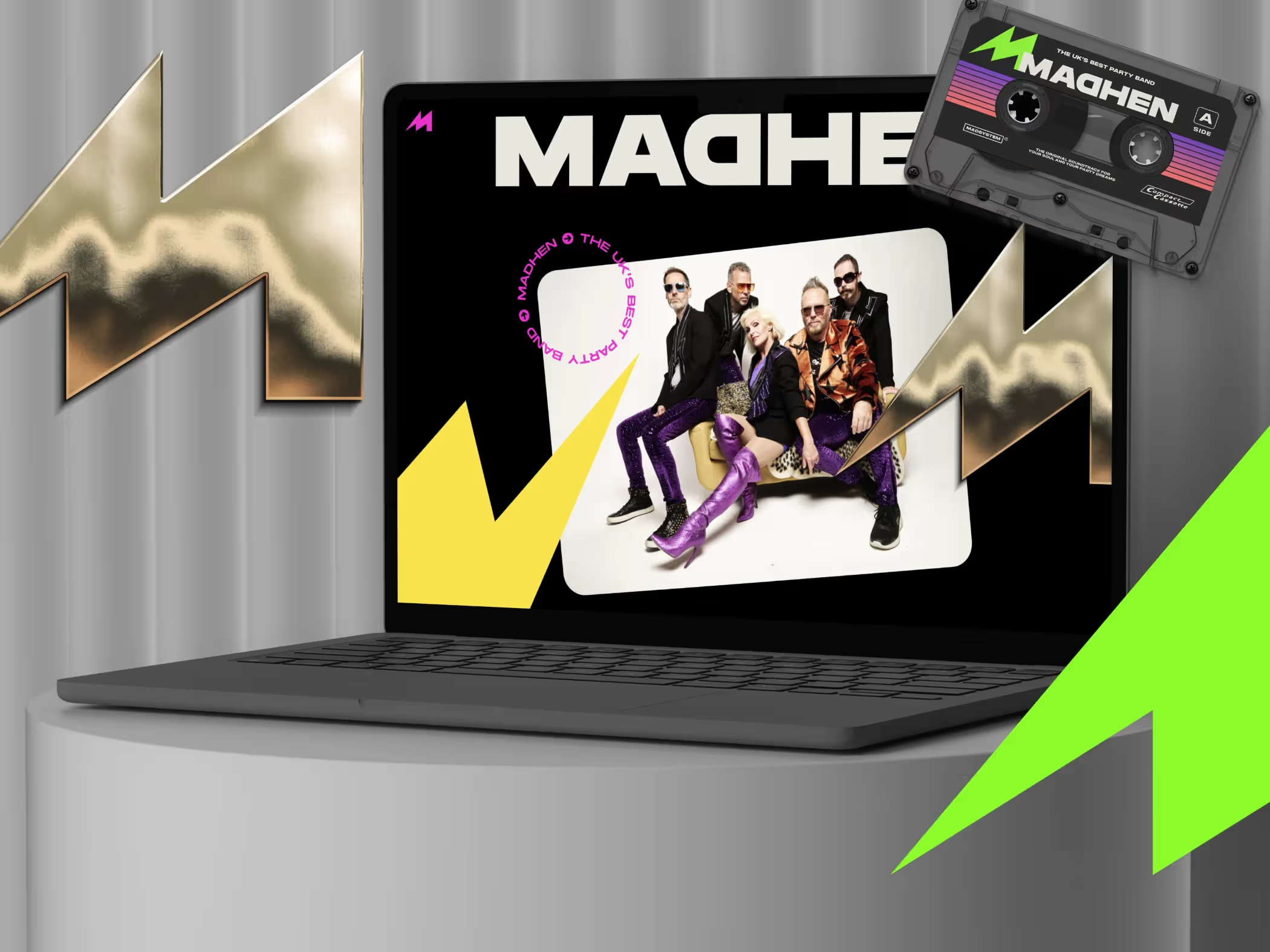
One of the UK's top live bands. A website that didn't come close.
Built for the way event planners actually make decisions — evidence-first, mobile, fast.
MadHen is one of the UK's leading live event bands — bold productions, big audiences, a brand built on spectacle. Their website told none of that story. Dated design, poor mobile experience, no clear path from interest to enquiry. Event planners making high-stakes booking decisions were landing on a site that looked like it belonged to a different act entirely. In a market where the decision often begins and ends online, this was a serious liability.
The new site was built around the way event planners actually make decisions — evidence-first, mobile, and fast. Strong video and photography lead every page. A clear enquiry flow removes the friction between interest and action. The CMS gives the team full control over a calendar that never stops moving.
Engagement increased by 120% in the period following launch.
Delivered: website design and development, CMS integration, custom animation, conversion optimisation.
Collaborators: Ben Hickingbotham at The Observatory
Breaking it down in numbers
Seconds Average Engagement Time
Worldwide Visitors
Increase of Traffic from Direct Sources

“Working with Tommy D is like having a wizard on our team. He takes the tangled mess of complex technical development and transforms it into seamless simplicity, allowing us to focus on the creative side of things. He's been our go-to guy for years, consistently delivering top-notch work with a smile. No task is too daunting for him; he handles every challenge with a can-do attitude that's nothing short of heroic. Tommy isn't just a developer—he's our secret weapon.”




Before you commit to anything
Not sure where to start? The 4C Growth Diagnostic takes eight minutes.
Twenty questions. A scored breakdown across all four pillars, Clarify, Craft, Convert, Continue. You will finish with a clear view of which part of your business is holding the next stage back, a priority for where to focus first, and a free resource that addresses your specific gap directly.
There is no pitch at the end. If the output is useful, you have something to act on today. If it is not, you have lost eight minutes.